Neo Cyber Piano
- 4.0
- Rating
- 1.00M
- Installs
- Free
- Price

 Analysis by App-foxy
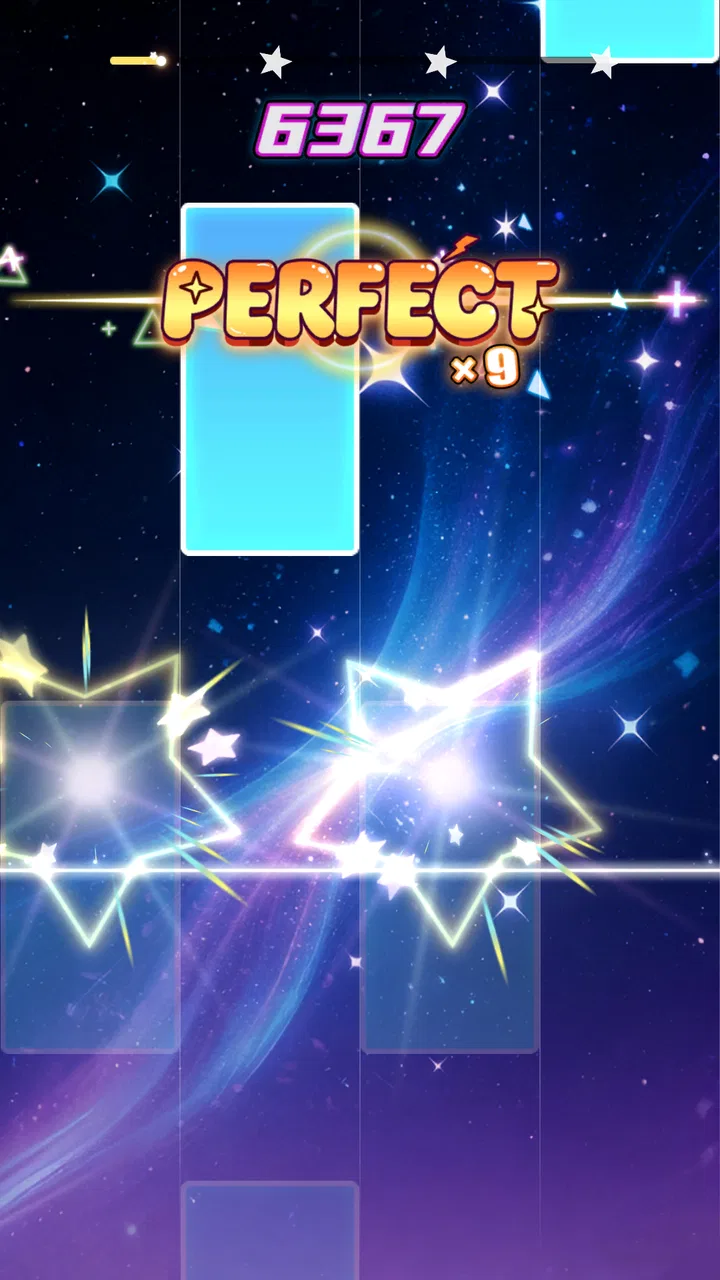
I spent time with Piano Spark: Ignite the Beat as a music game, and my first impression was easy to understand: it wants you to react to rhythm rather than treat the piano theme as a serious learning course. The basic appeal is immediate. You follow the musical flow, try to keep your timing clean, and chase the satisfying feeling of staying with a track from beginning to end. It is free to start, rated for Everyone, and made by MayaGameStudio, so it is clearly aimed at a broad audience rather than a specialist group of musicians.
That accessibility is the strongest reason to try it. I could imagine opening it for a few spare minutes, playing while waiting for an appointment, or handing the phone to someone who enjoys tapping games but does not want a complicated tutorial. The store summary, “Master's Spark, Burning Rhythm — Catch Your Piano Spark!”, gives the right general mood, although the actual attraction is less about becoming a pianist and more about building a reliable rhythm habit through repeated play.
Its current version is 1.1.5, and the game has already passed the half-million-install mark. That level of reach suggests it has found an audience, while the average rating of 3.9 from roughly 255 ratings points to a more mixed experience than a universally polished one. I think that is a fair starting expectation: this is a pleasant, lightweight rhythm game, but not one I would recommend blindly to every player who likes music.
You May Also Like

 Blood Strike: 2.5 Anniversary
Blood Strike’s Loadouts Turn Every Drop Into a Tactical Gamble
A close look at Blood Strike’s custom loadouts: how fast access to signature weapons reshapes its battle royale rhythm, rewards preparation, and narrows the gap between fights.

 Pandora - Music & Podcasts
Pandora’s Music Is Easy to Start, but Harder to Recover
Pandora’s strength is its low-effort path from a seed to a station. Its weak spot is how much confidence it asks you to place in connection, setup, and quiet recovery.

 8 Ball Pool
 Is Built on Rivalries, Rematches, and Routine
A close look at the rivalries, rematches, shared routines, and unanswered safety questions that turn a quick pool match into a persistent mobile community.

 Samsung Music
’s Quiet Strength Is Playing What You Already Own
Its reach comes less from spectacle than from dependable access to a personal library. That simplicity is both the app’s strongest retention engine and its ceiling.

 AccuWeather: Weather Radar
AccuWeather Review: A Quick, Clear Forecast for Everyday Decisions
For everyday plans, the best forecast is the one you can understand quickly. AccuWeather makes rain timing, radar, and local conditions easy to act on, with a few trade-offs.

 Hill Climb Racing
Why Hill Climb Racing Still Turns Crashes Into One More Run
A tiny car, a bumpy hill and one more upgrade: Hill Climb Racing keeps resurfacing because its simple chaos makes every near-miss feel personal.
More From Our News Desk
View All News


How the first goals shape the opening minutes
The early goal is refreshingly clear: stay in time and make it through the musical sequence with as few mistakes as possible. I did not need to learn a large set of rules before understanding what the game wanted from me. That clarity matters in a rhythm title because the first few minutes should teach the relationship between movement, sound, and timing without burying the player in menus or explanations.
I found the opening loop most appealing when I treated it as a warm-up rather than a test of musical ability. The first attempts are useful for learning how quickly the game expects a response and how forgiving the timing feels. Instead of trying to play perfectly at once, I recommend concentrating on the beat and observing where mistakes happen. That approach makes the first sessions less frustrating and gives the game a chance to establish its rhythm.
The piano presentation also helps the premise feel coherent. Even if you have never played an instrument, the musical framing makes each successful input feel more purposeful than an ordinary reaction challenge. The game is not asking me to understand notation or practice finger technique. It gives me a simple target: listen, watch, respond, and maintain the flow.
That simplicity is both a strength and a limitation. Someone looking for a quick music-themed game can begin without preparation, but a player expecting a structured piano-learning tool should look elsewhere. Piano Spark does not replace lessons, a keyboard app, or guided practice. I would choose it for entertainment and timing practice, not for learning scales, reading music, or developing proper technique.
One useful way to approach the early stages is to play with sound enabled whenever possible. Rhythm games can sometimes be played visually, but relying only on what appears on the screen makes the experience more mechanical. Listening for the pulse gives me a better sense of whether I am reacting early, late, or simply losing concentration. This is a small habit, yet it makes the game feel more musical and less like a sequence of unrelated taps.
What progress feels like during normal play
The clearest progress signal is personal consistency. I notice improvement when I can stay focused for longer, recover from a missed input, and finish a sequence without repeatedly breaking the rhythm. That kind of progress is subtle, but it suits a game built around timing. The reward is not only reaching a later point; it is feeling that my hands and attention are beginning to cooperate.
I also like that a rhythm game can create short-term goals without demanding a long session. I can aim to improve one attempt, then stop after a few minutes with a clear sense of what went wrong. This makes it suitable for casual players who prefer small challenges instead of a large campaign. It is also a reasonable choice for younger players because the Everyone rating keeps the tone broadly accessible, although younger users may still need help with the optional spending attached to the free download.
The important distinction is between visible progress and meaningful progress. A new unlock or a higher result can encourage another attempt, but the game works best when those signals support better timing rather than replace it. If a player is only chasing the next item or milestone, the music can become background noise. I got more out of each session when I set a specific aim, such as keeping a steady response through a difficult passage or finishing without rushing.
For that reason, I suggest using a simple three-step routine. First, play once without worrying about the result. Second, identify the section where concentration or timing breaks down. Third, replay with attention on that one issue. This turns repetition into practice instead of random retrying. It is one of the more useful ways to make a small music game feel less disposable.
There is also a practical benefit to separating “learning a pattern” from “trying to beat it.” On the first attempt, I watch and listen. On the next, I focus on clean execution. If I combine both jobs immediately, a mistake can make me panic and cause several more. Keeping those goals separate makes the pacing feel calmer and helps reveal whether the problem is unfamiliarity or genuine difficulty.
Difficulty, challenge, and the shape of the learning curve
The challenge in Piano Spark comes from maintaining attention while the rhythm asks for quicker or more precise responses. That is a familiar structure for the genre, but the quality of the experience depends heavily on how smoothly the game moves from comfortable play to demanding play. I prefer a curve that gives me enough time to build confidence before asking for sustained accuracy. When the transition is too abrupt, a casual game can feel less inviting very quickly.
My advice is not to measure difficulty only by whether a sequence can be completed. A section may be technically manageable but still tiring if it requires constant concentration. In those moments, taking a short break is more effective than forcing repeated attempts. Fatigue produces rushed inputs, and rushed inputs can make the game appear harder than it really is.
Players who already enjoy rhythm games may reach the point of challenge sooner than newcomers. Experienced players usually recognize patterns and understand how to stay relaxed when the screen becomes busy. New players may need more attempts before the timing becomes instinctive. That difference affects the game’s longevity: beginners can find a satisfying learning curve, while genre veterans may judge it mainly by how much variety and depth remain after the basic timing loop feels familiar.
I would not recommend treating every mistake as a failure of skill. Sometimes the better question is whether I was watching the wrong visual cue or listening too passively. A useful adjustment is to choose one reference point and keep attention there rather than scanning the entire screen. Another is to avoid tapping ahead because a familiar pattern seems predictable. Rhythm games often punish confidence that arrives before the actual cue.
The game is a better fit for players who enjoy gradual mastery than for people who want a relaxed soundtrack with almost no pressure. Even a simple piano challenge can become tense when the goal is a clean run. If you prefer music apps that let you improvise, compose, or listen without interruption, this is not the right alternative. Its purpose is active response, and that means mistakes are part of the experience rather than something the game can completely hide.
On the other hand, the challenge can be useful in short bursts. I would play a few rounds when I wanted something more engaging than passive scrolling but less demanding than a full action game. The concentration required is enough to occupy my attention, yet the central idea remains understandable. That middle ground is where the title has its best chance of becoming a regular casual game.
What keeps players returning, and where pressure appears
Retention in a rhythm game usually comes from the desire to improve one more attempt. Piano Spark benefits from that natural loop because timing is easy to understand but difficult to perfect. A near-success can be more motivating than a complete failure: when I feel that a cleaner run is within reach, repeating the sequence makes sense.
That motivation is strongest when the game gives progress a clear purpose. Unlocks and goals can make continued play feel more directed, but they should not become the only reason to return. If the music and timing are enjoyable, the player has an internal reason to continue. If the underlying loop feels repetitive, external rewards may only delay that feeling rather than solve it.
The free entry point lowers the barrier to trying it, but the presence of in-app purchases means families and careful spenders should pay attention before handing over a device. Individual purchases range from $7.99 to $12.99, which is significant for a casual game. I would keep spending disabled or require approval for younger players. The game can be sampled without paying, but that does not mean every part of the experience should be approached casually from a purchasing standpoint.
This is also where the game may lose players who dislike pressure around optional purchases. A free music game can feel welcoming at first, then less comfortable if progress or convenience appears connected to spending. I would judge the title on the quality of its playable core before considering anything paid. If the basic rhythm loop does not hold your attention, buying an item will not turn it into a different kind of game.
Another retention issue is repetition. Replaying a musical challenge is satisfying when I am learning something or improving a result. It becomes tiring when each attempt feels identical and my performance does not reveal a new goal. To keep sessions healthy, I recommend stopping after a few unfocused retries. Returning later with fresh attention is usually better than converting the game into a frustrating endurance test.
There is a realistic everyday use case here. Imagine having ten minutes before a train arrives. I would open the game, play one attempt to settle into the beat, make a second attempt with a specific timing goal, and then stop rather than chase an endless perfect result. That makes the short session feel complete. The game is less convincing as a long evening activity unless you genuinely enjoy repeating patterns and refining small improvements.
Who should choose it over other music games
I would recommend Piano Spark to someone who wants a straightforward piano-themed rhythm game, especially if they like short sessions, visible improvement, and challenges that can be understood immediately. It is also a reasonable pick for a family device because its content rating is Everyone and the basic premise is easy to explain. Younger players should still have purchase controls in place, and adults should be comfortable with the possibility that the game’s long-term appeal depends on repetition.
I would skip it if your main goal is to learn real piano. A proper learning app is better for lessons, note reading, technique, and feedback tied to an actual instrument. I would also choose a composition or virtual-keyboard app if I wanted to create melodies rather than follow a prescribed rhythm. Piano Spark is about execution under timing pressure, not musical authorship.
Compared with a typical rhythm game built around a large collection of songs or elaborate social competition, this title is easier to approach but may feel narrower. That trade-off can be positive for a newcomer who does not want a crowded interface or a complicated progression system. It can be negative for an experienced player who expects deep customization, extensive competitive tools, or a long-form campaign. I found its appeal strongest when I judged it as a focused casual game rather than as a complete music platform.
Device compatibility is reasonably broad because it runs on Android versions beginning with 6.0. That makes it accessible to people using older phones, although the experience will still depend on the device’s responsiveness and audio setup. Rhythm games are especially sensitive to input delay. If taps feel consistently late, I would first test headphones, reduce distractions, and check whether the phone is handling other tasks in the background before deciding that my timing is the problem.
That troubleshooting point is easy to overlook. A player can misread delayed sound as poor skill, then compensate by tapping early and make the results worse. Playing in a quiet environment and using a stable audio setup gives a fairer impression of the game. I would also avoid judging it during a hectic commute if the screen is difficult to see or the phone is being held awkwardly. The game’s simplicity does not remove the need for comfortable conditions.
My verdict on goals, pacing, and staying power
After playing it with those expectations, I see Piano Spark as a modest but approachable music game with a clear early goal and a familiar reason to retry: improve timing and keep the rhythm alive. Its best quality is immediacy. I can understand what to do quickly, and a short session can still feel worthwhile. The piano theme gives the action a recognizable identity without pretending to provide formal musical education.
The progression works when it turns each attempt into a small lesson. I appreciate the moments when I can identify a specific weakness and correct it, whether that means slowing my reactions, listening more carefully, or refusing to tap ahead. Those are the concrete improvements that give the game more substance than a quick novelty.
Its weaker side is the risk of limited long-term variety and the pressure created by optional purchases. The rating of 3.9 reflects why I would approach it with balanced expectations rather than call it essential. It can be enjoyable, but enjoyment depends on whether you like repeating rhythm challenges and whether the available goals continue to feel meaningful after the opening appeal fades.
My final recommendation is simple: try it if you want a free, accessible way to spend short periods actively listening and reacting. Keep your sessions focused, use sound to guide your timing, and set purchase safeguards before letting children play. Choose a piano-learning app for genuine instruction, or a more expansive rhythm game if you need deeper variety and competition. For the right player, Piano Spark: Ignite the Beat delivers a clean little challenge; for everyone else, its straightforward loop may be enjoyable briefly but not compelling enough to become a daily habit.
FAQs for Neo Cyber Piano
01What is Piano Spark: Ignite the Beat?
Piano Spark: Ignite the Beat is an engaging music game app available on Android and iOS platforms. It combines rhythm-based gameplay with the challenge of learning piano melodies. Players tap on tiles in sync with popular songs to score points and improve their musical skills.
02Is Piano Spark suitable for beginners in music?
Yes, Piano Spark is designed to be accessible for beginners. It offers various difficulty levels, starting from easy to advanced, allowing users to learn at their own pace. The app also provides tutorials and practice modes to help users improve their rhythm and timing.
03Does Piano Spark require an internet connection?
Piano Spark can be played offline, making it convenient for users who want to enjoy the game on the go without relying on a stable internet connection. However, certain features like downloading new songs or accessing online leaderboards may require internet access.
04Are there in-app purchases in Piano Spark?
Yes, Piano Spark offers in-app purchases. Users can buy additional song packs, remove ads, or unlock premium features. While the basic version is free to play, these purchases enhance the gaming experience and provide access to a wider variety of songs.
05How does Piano Spark help improve musical skills?
Piano Spark helps users enhance their musical skills by improving hand-eye coordination, rhythm, and timing. The app's interactive gameplay encourages players to stay in sync with the music, promoting a better understanding of rhythm patterns and music theory over time.
Pros
- User-friendly interface for all skill levels.
- Wide variety of musical genres to explore.
- Interactive tutorials enhance learning.
- Offline mode available for practice anywhere.
- Regular updates with new features and songs.
Cons
- Occasional lag in touch response.
- Limited free song selection.
- In-app purchases can be costly.
- Requires large storage space.
- Ads can interrupt gameplay.

Neo Cyber Piano
Gallery